
Remy vs Non-Remy Hair: Key Differences for Wholesale Buyers
Introduction
When sourcing human hair extensions, one of the most important terms you’ll encounter is Remy Hair. Many salons, distributors, and beauty brands specifically request Remy hair because of its superior quality and performance.
However, not everyone understands the difference between Remy Hair and Non-Remy Hair. For wholesale buyers and salon owners, this knowledge is critical to making sourcing decisions that reduce returns, boost customer satisfaction, and protect your brand reputation.
In this guide, we’ll break down Remy hair, how it differs from Non-Remy hair, and which option is best for your business.
Understanding Remy Hair: The Premium Standard
Remy hair refers to 100% real human hair collected with all cuticles aligned in the same direction, from root to tip. This careful collection process preserves the hair’s natural structure, which is why Remy hair is considered the gold standard in the extension industry.
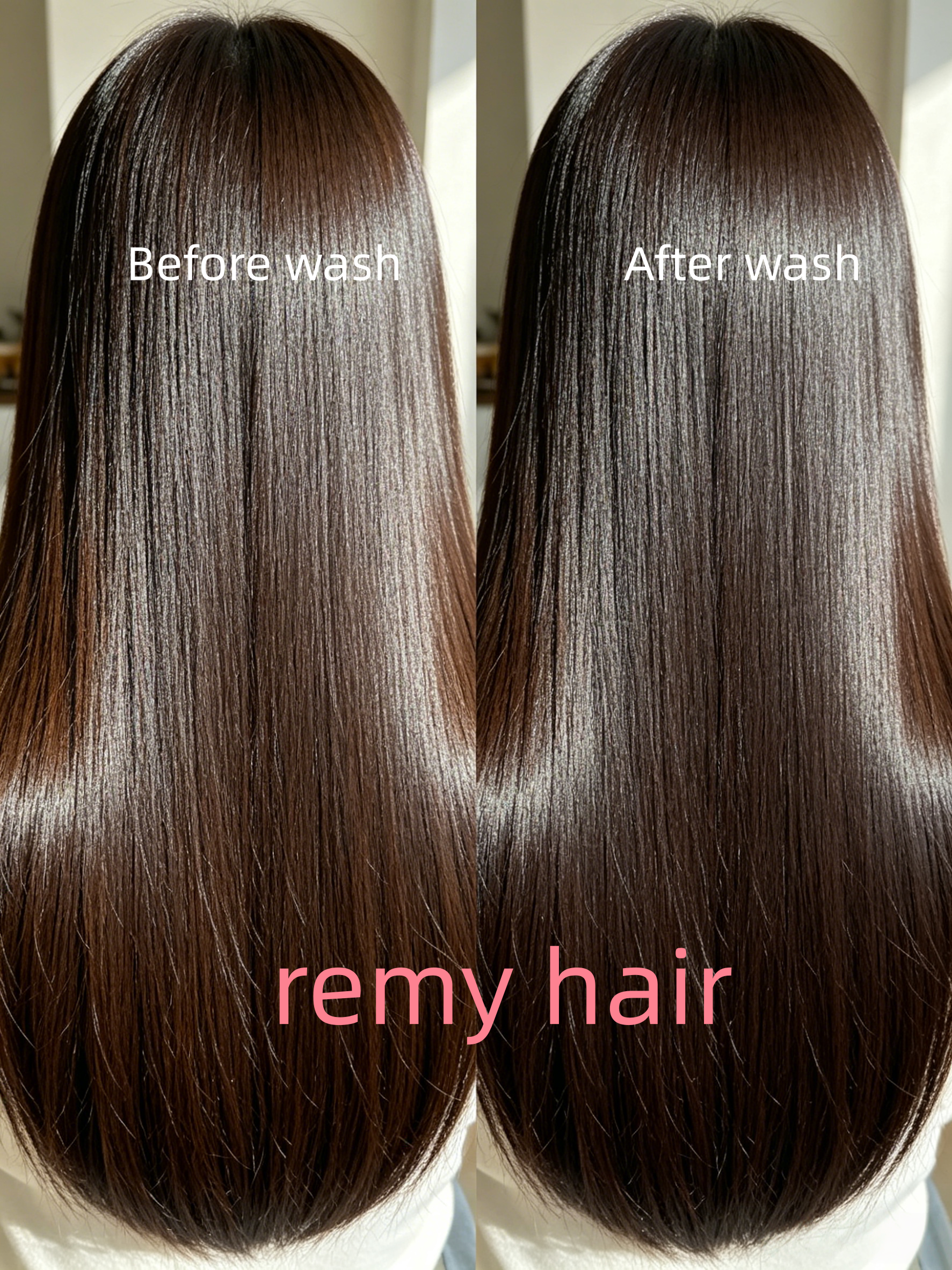
Because the cuticles remain intact and aligned, the hair maintains its natural texture and experiences significantly less tangling. Unlike processed alternatives, Remy hair behaves just like the wearer’s own hair, making it a favorite for professional styling services.
Key characteristics of Remy Hair:
- Cuticles aligned in one direction
- Smooth, natural texture that lasts wash after wash
- Reduced tangling and matting
- Longer lifespan with proper care
- Consistent styling performance
A Step Up: Virgin Remy Hair
For buyers targeting high-end salons, you’ll also encounter Virgin Remy Hair. This is Remy hair that has never been chemically processed (dyed, permed, or bleached) before collection. As the purest form of real human hair, it retains the most natural texture, can withstand repeated coloring and heat styling, and offers the longest lifespan of any extension type.
What Is Non-Remy Hair?
Non-Remy hair is collected from multiple sources, with cuticles often facing random directions. To reduce tangling and create a smooth appearance, manufacturers typically apply heavy chemical treatments or silicone coatings to the hair.
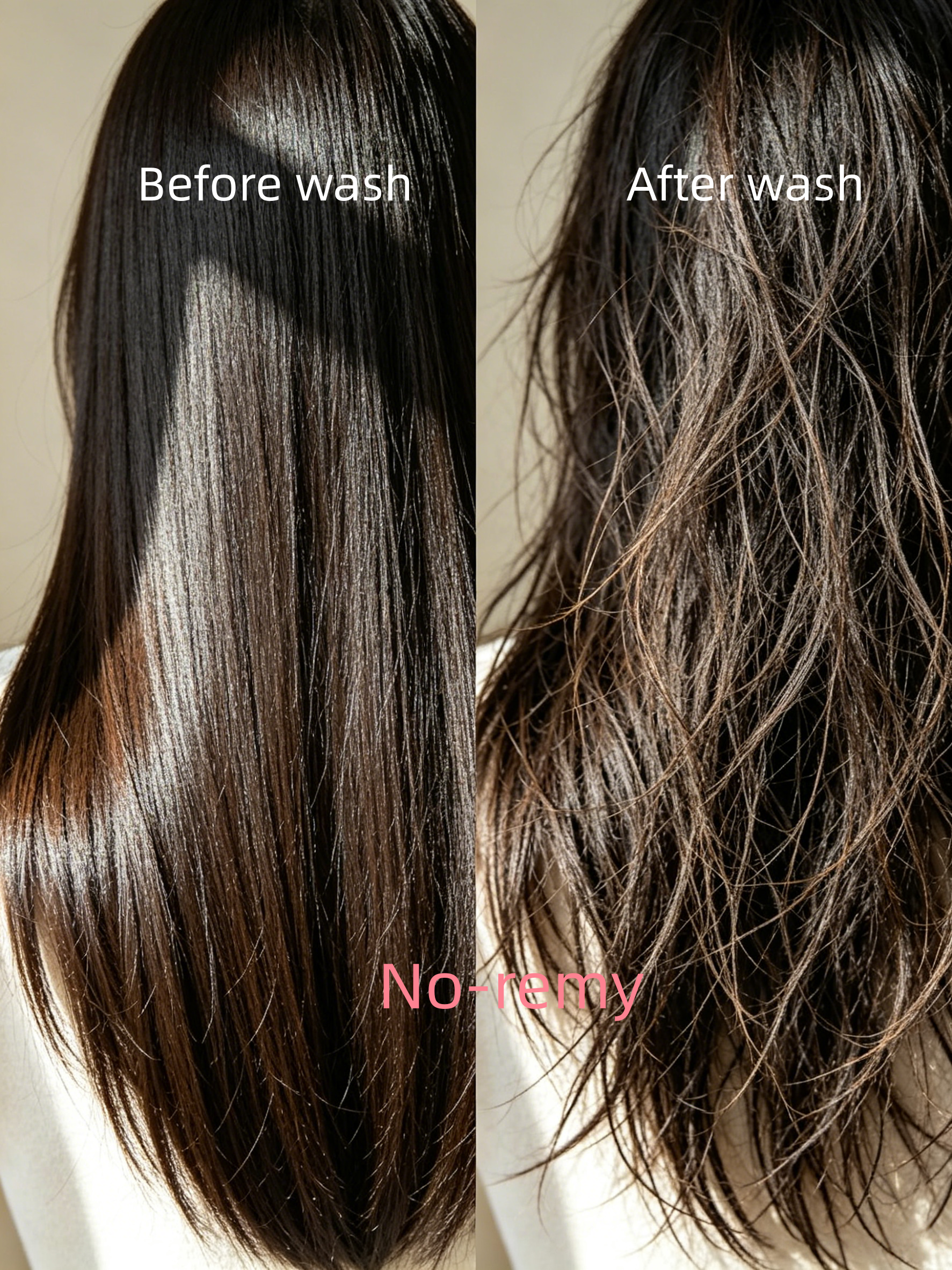
Initially, Non-Remy hair can appear shiny and smooth, thanks to these coatings. However, after just a few washes, the silicone layer wears off, revealing the mixed cuticle structure underneath. This leads to dryness, severe tangling, and matting that cannot be fixed.
Characteristics of Non-Remy Hair:
- Mixed cuticle directions
- Lower production cost
- Prone to tangling and matting after the first few washes
- Short lifespan (often just 1-3 months)
- Heavily processed with chemicals and coatings
Remy Hair vs Non-Remy Hair: Key Differences
- Cuticle Alignment
- The primary difference is cuticle direction. Remy Hair maintains cuticles aligned from root to tip, while Non-Remy Hair contains mixed cuticle directions that create friction and tangling over time.
- Winner: Remy Hair
- Appearance & Natural Texture
- Remy Hair reflects light just like natural hair, with a soft, realistic sheen that doesn’t look overly “plastic.” Its natural texture remains consistent, even after months of washing and styling.
- Non-Remy Hair may look shiny at first due to silicone coatings, but once the coating wears off, the hair appears dull, dry, and frizzy, losing its natural texture completely.
- Winner: Remy Hair
- Durability
- High-quality Remy Hair Extensions can last 6–12 months or longer with proper care. Virgin Remy hair, with no prior processing, can even last up to 2 years for repeat clients.
- Non-Remy Hair generally has a lifespan of just 1-3 months, with many clients reporting significant tangling after 2-3 washes.
- Winner: Remy Hair
- Styling Performance & Heat Protection
- Remy Hair can be curled, straightened, washed, and restyled repeatedly, making it ideal for salons that offer frequent styling services. While it’s resilient, using heat protection products is still recommended to preserve the natural texture and prevent damage, especially for clients who use high-heat tools regularly.
- Non-Remy Hair cannot withstand repeated heat styling. The silicone coatings break down quickly under high heat, leading to irreparable damage, tangling, and even breakage.
- Winner: Remy Hair
- Cost & Long-Term Value
- Non-Remy Hair is typically less expensive upfront, making it suitable for budget-focused markets or one-time use extensions.
- Remy Hair costs more initially but offers far better long-term value. Wholesale buyers who choose Remy hair see fewer returns, fewer customer complaints, and higher repeat orders, leading to stronger brand loyalty and higher lifetime customer value.
- Winner: Depends on Your Market Positioning
Why Salons Prefer Remy Hair Extensions
Professional salons prioritize quality because client satisfaction directly impacts repeat business and word-of-mouth referrals. Remy Hair Extensions offer benefits that align perfectly with salon goals:
- Natural blending with clients’ own hair
- Longer wear time, leading to fewer maintenance appointments
- Better styling flexibility for cuts, color, and heat tools
- Higher client satisfaction and positive reviews
- Opportunities to offer premium services and higher price points
For salons serving quality-conscious clients, Remy Hair remains the preferred option, as it eliminates the frustration of extensions tangling or looking unnatural after a few weeks.
Which Hair Type Is Better for Wholesale Buyers?
Wholesale buyers should evaluate their target market carefully when choosing between Remy and Non-Remy hair:
Choose Remy Hair If:
- You serve professional salons and stylists
- You focus on premium products and building a reputable brand
- You want to reduce returns and customer complaints
- You prioritize long-term customer retention and repeat orders
Choose Non-Remy Hair If:
- You target entry-level markets with strict price sensitivity
- Products are intended for short-term or one-time use (e.g., events)
- You work with clients who prioritize low upfront cost over long-term quality
Many successful distributors focus on Remy Hair because it generates fewer support tickets, higher customer loyalty, and stronger margins over time. Even buyers who offer both lines often find their Remy hair products drive the majority of repeat business.
How to Identify Genuine Remy Hair From Suppliers
When evaluating hair extension manufacturers, ask these critical questions to ensure you’re getting genuine Remy hair:
- Is the hair cuticle-aligned from root to tip?
- Is it 100% real human hair, with no synthetic blends?
- Can you provide samples for testing tangling and wash performance?
- What quality control processes are in place to verify cuticle alignment?
- Is the hair suitable for coloring and heat styling?
Working with a reliable hair extensions manufacturer helps ensure consistent quality and long-term business success, avoiding the common pitfall of “fake Remy hair” sold at premium prices.
Essential Care Tips to Extend Hair Extension Lifespan
To help your salon clients get the most out of their Remy hair extensions, share these simple care tips:
- Always use sulfate-free shampoo and conditioner designed for human hair extensions
- Apply heat protection spray before using any hot tools, even on Remy hair
- Brush the hair gently with a wide-tooth comb, starting from the tips and working up
- Avoid sleeping with wet hair, which can cause tangling
- Store extensions properly when not in use to preserve their natural texture
These small steps can significantly extend the lifespan of Remy hair extensions, leading to happier clients and more repeat orders for your business.
Conclusion
Both Remy Hair and Non-Remy Hair have their place in the market, but they serve very different needs. For salons, beauty brands, and distributors seeking premium quality, natural appearance, and long-lasting performance, Remy Hair remains the clear preferred choice.
Understanding these differences can help buyers make informed sourcing decisions, reduce customer complaints, and provide better products to their clients. Whether you choose Remy, Virgin Remy, or a mix of both, prioritizing quality will always support your brand’s growth and reputation in the competitive hair extension industry. Once you have chosen your hair type, our wholesale hair bundles buyer's guide covers bundle construction, lengths, and stocking strategies in detail.