
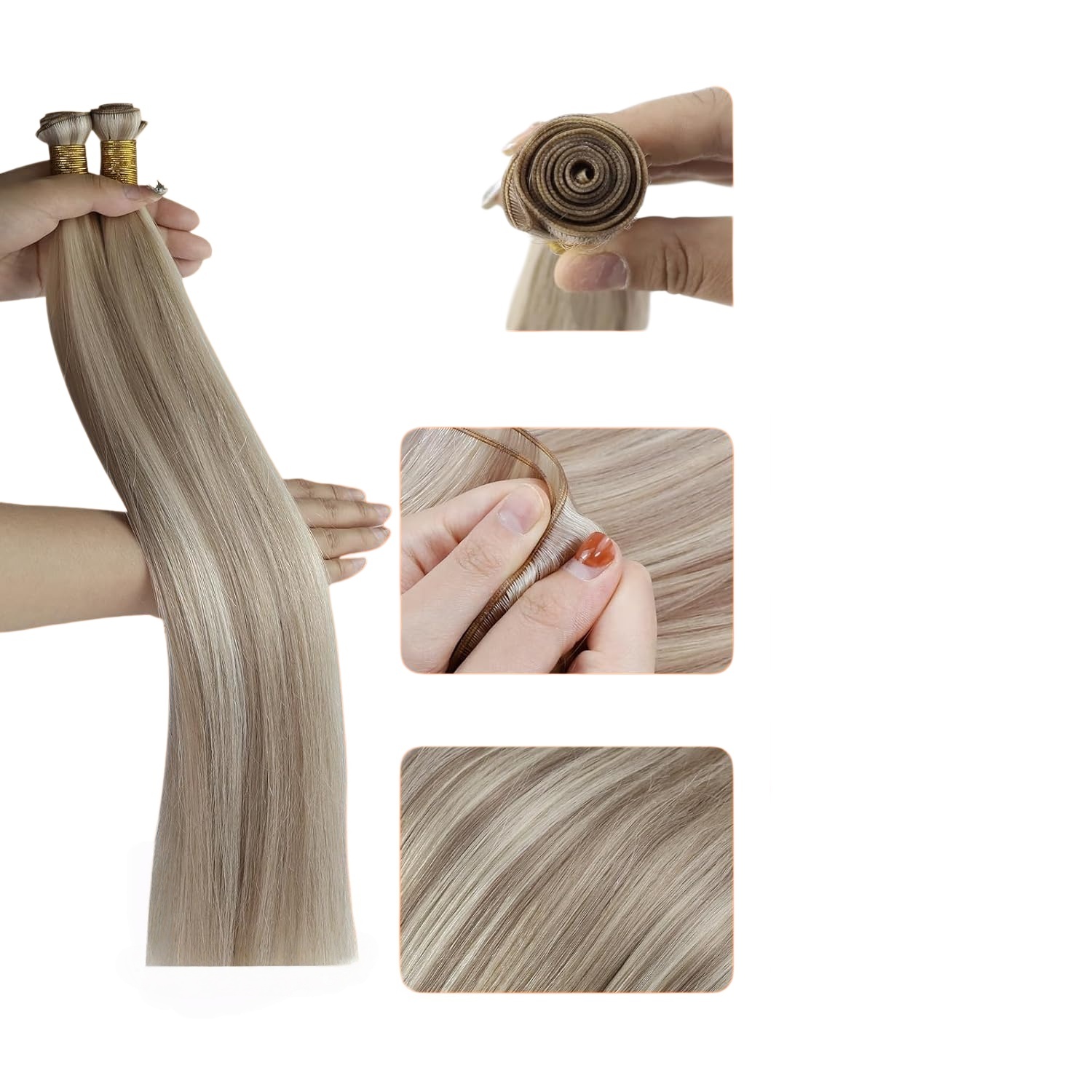
What Are Hair Bundles?
In the United States market, the word "bundles" refers to hair extension wefts — long tracks of hair that are machine-sewn together at the top so they can be installed as sew-ins, bonded into wigs, or cut into custom pieces. If your clients ask for a "sew-in" or a "bundle deal," they are asking for this product. In the UK and parts of Europe the same product is usually just called a "weft," so when you source internationally it helps to know both terms point to the same thing.
Hair bundles are the workhorse product of the extension business for three reasons. First, they are the most versatile format: a salon can sew them in, a wig maker can construct units from them, and a retailer can resell them directly to clients who install their own hair. Second, they suit every budget tier — the same weft format exists in basic Remy hair and in premium virgin hair. Third, they generate repeat business, because clients who wear sew-ins come back every six to ten weeks for a refresh, a new install, or an extra bundle for volume.
This guide walks through the decisions that actually matter when you buy wholesale hair bundles: which lengths, textures, and weights to stock, which weft construction to choose, how these specs affect the price you pay, and how to inspect bundles before you commit to a bulk order.
The Three Specs That Decide What You Stock
Every bundle order comes down to three variables: length, texture, and weight. Get these right and your inventory turns over. Get them wrong and you sit on dead stock.
Length
Most suppliers, including our factory, offer weft hair in a range from 14 to 24 inches, with some extending from 8 inches up to 30 inches on request. Three practical rules apply:
- Mid lengths move fastest. For most salons, 16 to 20 inch bundles are the sweet spot — long enough for a clear transformation, short enough to stay affordable for everyday clients.
- Longer lengths cost more per bundle. A 24 inch bundle contains roughly double the hair of a 12 inch bundle at the same weight tolerance, and the price follows the raw material, not the labor.
- Stock depth at the middle, order long lengths on demand. Keep your 16 to 20 inch range in quantity and treat 22 inch and above as special-order items for clients who specifically ask for them.
Texture
Straight, body wave, deep wave, loose deep, kinky curly, yaki — the texture menu is long, but your stocking menu should not be. Salons and distributors that move volume almost always run a tight texture range:
- One straight line — the baseline seller that blends with the widest range of clients and supports the largest variety of styling.
- One or two wave or curl lines — chosen based on your local client base. Match the texture your walk-in clients actually have, not the texture that photographs best.
- Custom textures on request — a factory that runs its own production can develop a specific curl pattern or match a texture you already sell, which is far more valuable than a supplier who only offers a fixed catalog.
The critical texture question for wholesale buyers is consistency: will the body wave you reorder in three months behave like the body wave you sold this month? That is a batch-control question, and we cover how to verify it in the inspection section below.
Weight
Weight is the spec most first-time wholesale buyers overlook, and it is the one most often used to hide quality differences. The market standard bundle weighs approximately 100 grams (about 3.5 oz). What separates suppliers is what happens inside that 100 grams:
- Single-drawn hair keeps its full thickness near the top and thins toward the ends. It hits the 100 gram mark but looks lighter once installed, and ends can appear wispy after a few washes.
- Double-drawn hair is sorted so the bundle stays thick from top to bottom. The same 100 grams looks and performs noticeably fuller, and the ends hold their density through months of wear.
- Weft construction adds effective volume. A double-wefted bundle packs more hair onto the track, which is why construction — covered next — matters as much as raw weight.
When you compare quotes between suppliers, always compare at the same declared weight and the same draw method. A cheaper "100 gram" bundle that is single-drawn with thin ends is not the same product as a 100 gram double-drawn bundle, and your clients will feel the difference long before you see it on an invoice.
Weft Construction: Single, Double, and Butterfly Wefts Explained
The way a bundle is sewn at the top — the weft — determines how it sheds, how it installs, and how full it looks. There are three constructions you should know before ordering:
Single (regular) weft is one row of machine stitching. It is the cheapest construction and is fine for occasional or budget use, but it is the most prone to shedding at the track and it wears out faster with repeated installs.
Double weft reinforces the track with a second stitched layer. The bundle holds its shape, sheds far less at the seam, and installs fuller — stylists notice the difference most at the braid-down, where a double weft sits flatter and anchors better. Our double weft line, such as the Double Weft Hair Extensions HE-DW-ST , is built for exactly this use case and can be ordered in lengths from 14 to 24 inches.
Butterfly weft folds the hair into a double-layer track that creates a fuller, voluminous look from a single bundle. It is the construction to reach for when clients want maximum density without stacking multiple bundles. Our Double Butterfly Weft delivers that doubled fullness while keeping the track secure and easy to work with.
A fourth option worth knowing is the invisible or "genius" weft, which uses an ultra-thin track so the install lies almost completely flat — useful for fine-haired clients and premium services. Our Invisible Genius Weft is made for salons that position themselves at the top of the market.
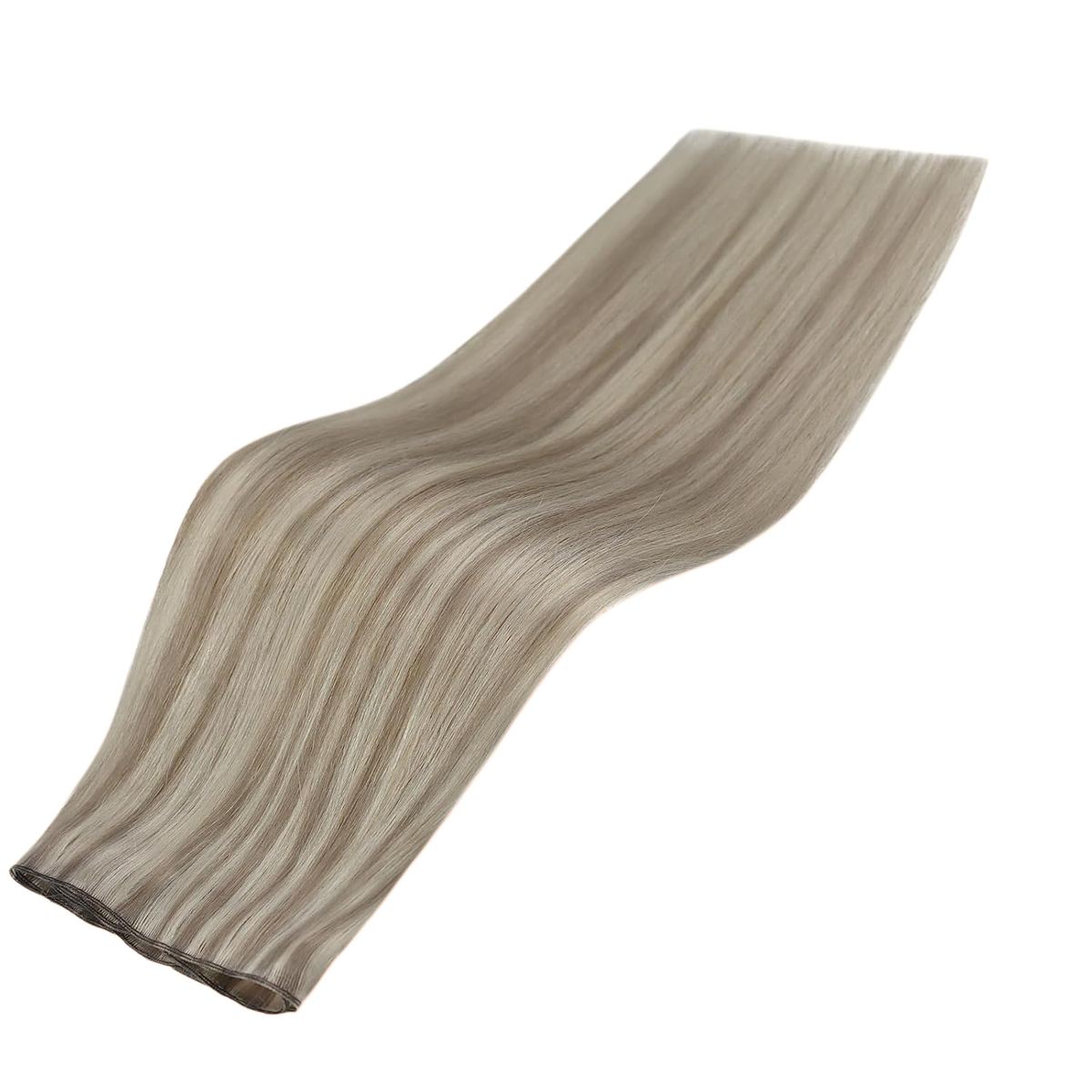
Here is a quick comparison for stocking decisions:
| Construction | Fullness per bundle | Shedding resistance | Best for |
|---|---|---|---|
| Single weft | Standard | Moderate | Budget lines, occasional wear |
| Double weft | High | High | Everyday salon installs, sew-ins |
| Butterfly weft | Highest | High | Volume-focused services, dramatic looks |
| Invisible/genius weft | High | High | Fine hair, flat premium installs |
If you are only building one bundle line to start with, double weft is the safest choice: it is the construction stylists trust for repeat installs, and it carries the fewest after-sale complaints.
How Bundle Specs Translate Into Wholesale Pricing
When a factory quotes you a price per bundle, that number is built from five inputs: hair origin and grade, length, weight, draw method, and weft construction. Texture affects price less than buyers expect — the raw hair cost dominates, which is why a 24 inch bundle costs dramatically more than a 14 inch bundle of the same hair, while a deep wave versus a body wave of the same hair moves the quote far less.
This has direct consequences for how you buy:
- Compare quotes spec-for-spec. A quote that looks 20% cheaper is often a single-drawn bundle, a lighter declared weight, or a single weft. Normalizing every quote to the same length, weight, and construction before comparing is the only honest way to evaluate price.
- Hair grade is the biggest hidden variable. Remy hair — cuticles aligned in one direction — behaves predictably through washes and styling. Non-Remy hair is cheaper upfront and costs more in complaints, refunds, and lost clients. Our guide on Remy versus non-Remy hair breaks down exactly what changes between the two.
- Factory-direct pricing removes a margin layer. Every trading company between you and the production floor adds markup without adding quality. Buying factory-direct puts that margin back into your business — and gives you a direct line to the people who actually control batch quality.
The cheapest bundle on the market is almost never the cheapest bundle to own. A bundle that sheds after two weeks costs you a redo appointment, a refund conversation, and a client who quietly stops rebooking.
A Starter Stocking Mix for Salons
If you are launching or restructuring a bundle inventory, start narrow and reorder fast rather than stocking wide and slow. A workable opening order for a mid-size salon:
- Lengths: concentrate on 16, 18, and 20 inch. Add 22 and 24 inch in small quantities only if your client book already shows demand.
- Textures: one straight line as your anchor, plus one wave line matched to your local clientele.
- Construction: double weft as your standard; add butterfly weft for clients who want maximum volume.
- Depth over breadth: better to carry depth in your best-selling two lengths than shallow coverage of six lengths. Dead stock is the most expensive inventory in the hair business.
One advantage worth planning around: sample-friendly minimums. Our weft products carry a minimum order of just one piece, which means you can test a new texture, a new length, or a new construction with a single bundle before committing to volume. Testing with real installs on real clients — then reordering what performs — beats forecasting from a catalog every time.
How to Inspect Bundles Before You Commit
Pre-order inspection is where professional buyers separate themselves from retail shoppers. Before approving a bulk production run, work through four checks:
- The wash test. Shampoo, condition, and air-dry the sample bundle exactly the way your salon would treat it. Hair that feels silky in the bag but turns dry or tangled after one wash has been coated, and the coating is hiding what you are actually buying.
- The comb-through test. Comb the bundle from ends to roots over a light surface and count the shed strands. A handful of strands is normal for a cut and sewn product; visible thinning at the track is not.
- The weft inspection. Check the stitching along the track: it should be tight, even, and sealed, with no gaps where hair can pull free. Pull gently along the seam — on a double weft the track should not stretch or gape.
- The spec confirmation. Put every approved detail in writing before production: length and how it is measured, declared weight, draw method, weft construction, texture reference, and color. A written spec sheet is what makes your reorder match your sample months later.
We cover the full testing protocol — including heat styling and color-lift checks — in our guide on how to test hair extension quality . If you want to go deeper on what separates consistent factories from inconsistent ones, our wholesale supplier selection guide lists the criteria that predict reorder reliability.
Choosing a Wholesale Bundles Supplier
Once you know what to stock and how to test it, the remaining decision is who to buy from. Three criteria carry most of the weight:
- Batch consistency. Ask how the factory controls texture and quality between production runs, and whether reorder samples can be matched against your original approval. This single question predicts most of your future satisfaction as a wholesale buyer.
- Customization capability. A factory with its own production line can adjust color, length, texture, and packaging to your market. That flexibility is what lets your business sell something differentiated instead of the same catalog everyone else lists — and if you are building your own brand, our private label guide walks through that process step by step.
- Communication and lead time. Weft orders ship worldwide in one to four weeks depending on customization and volume. A supplier who answers spec questions precisely, confirms details in writing, and delivers inside the promised window is worth more than a margin point saved elsewhere.
When you are ready to request a quote, send a complete spec — length, weight, construction, texture, color, and quantity — so the factory can quote accurately on the first pass. Our guide on what to include in a hair extension quote request gives you a copyable checklist.
Frequently Asked Questions
How many bundles do I need for a full install?
For most sew-ins, 3 bundles create a full look at 14 to 18 inches. For 20 to 24 inch installs, add a fourth bundle, because longer bundles have shorter tracks and you need more of them to cover the same head. Butterfly weft constructions reduce the count — two to three bundles achieve what three to four single wefts would deliver.
What length bundles sell best?
16 to 20 inches is the core of the market for most US salons. These lengths deliver a visible transformation at a price point most clients accept, and they suit the largest range of everyday styles. Longer lengths carry higher price tags and thinner demand, which makes them better as special-order items than as shelf stock.
How much does a hair bundle weigh?
The industry standard is approximately 100 grams (3.5 oz) per bundle. What matters beyond the headline weight is whether the hair is single-drawn or double-drawn, and how the weft is constructed — both determine how full the same 100 grams looks and wears after installation.
Can I order custom lengths, colors, or textures?
Yes. As a factory we produce weft hair in lengths from 14 to 24 inches and support customization across color, length, texture, and packaging. Sample orders start from a minimum of one piece, so you can test a custom spec before committing to production quantities.
How long does a wholesale bundle order take to deliver?
Standard and customized orders ship worldwide within one to four weeks. Production time depends on the level of customization — a standard texture and color ships faster than a custom-developed curl pattern or a bespoke color match.
Single weft or double weft — which should I stock?
Double weft, in almost every case. It sheds less, installs fuller, survives repeated installs, and generates fewer complaints. Single weft is only worth carrying as an entry price point. For clients who want maximum density from fewer bundles, butterfly weft is the premium step up from double weft.
Conclusion
Buying wholesale hair bundles well comes down to a handful of repeatable decisions: stock depth in 16 to 20 inch double weft lines, match textures to your actual client base rather than the catalog, normalize every quote to the same weight and construction before comparing prices, and inspect samples with a real wash-and-comb protocol before approving production.
At Miran Hair, we manufacture weft hair extensions — double weft, double butterfly weft, and invisible genius weft — in 100% virgin human hair with sample-friendly minimums starting at one piece. Every order can be customized by color, length, texture, and packaging, and ships worldwide in one to four weeks.
Ready to plan your bundle inventory? Contact our team for a quote, or start by reading our guide on what to send when requesting a hair extension quote .