
Introduction: Why Choosing the Right Extension Type Matters for Your Salon
The global hair extension market reached $1.524 billion in 2024 and is projected to grow to $2.394 billion by 2031, expanding at a compound annual growth rate (CAGR) of 6.8%, according to QYResearch. This remarkable growth is driven by increasing consumer demand for versatile hair styling options, the influence of social media beauty trends, and a growing acceptance of hair enhancements across all demographics. For salon owners, wholesale distributors, and beauty professionals, this represents a significant revenue opportunity — but only if you stock the right products for your clientele.
One of the most critical decisions you will make as a salon owner or hair extension retailer is which types of extensions to offer. Each extension method — tape-in, clip-in, sew-in, and fusion — serves a different client need, requires different skill levels to install, and generates different profit margins. Stocking the wrong type for your market can mean lost revenue, unhappy clients, and wasted inventory. Conversely, offering the right mix of extension types can transform your salon into a one-stop destination for hair transformation services.
In this comprehensive comparison guide, we break down every major hair extension type available on the wholesale market today. We cover installation times, lifespans, retail and wholesale pricing, ideal client profiles, maintenance requirements, and profit strategies for each method. Whether you run a high-end salon, a neighborhood beauty bar, a mobile styling business, or a wholesale distribution operation, this guide will help you make informed purchasing decisions that maximize your return on investment.
If you are new to evaluating hair extension quality, we recommend reading our guide on how to test hair extension quality before placing your first wholesale order.
Understanding the Hair Extension Market in 2026
The hair extension industry has evolved dramatically over the past decade. China produces over 70% of the world's hair extensions, with Xuchang (Henan Province) serving as the global manufacturing hub. This concentration of production creates both opportunities and challenges for B2B buyers. On one hand, factory-direct sourcing offers significant cost advantages. On the other hand, quality varies enormously between manufacturers, making supplier selection a critical skill.
Several key trends are shaping the wholesale hair extension market in 2026:
● Diversification of extension methods: Clients no longer settle for one type. They want options based on occasion, lifestyle, and budget. Salons that offer multiple extension types report 35-50% higher average ticket values.
● Rising demand for Remy and virgin hair: Consumers are more educated than ever about hair quality. They understand the difference between Remy and non-Remy hair, and they are willing to pay premium prices for cuticle-aligned products. Learn more about this distinction in our Remy vs Non-Remy hair guide .
● Growth of online wholesale channels: Online purchasing now accounts for a significant and growing share of B2B transactions. Salons and distributors increasingly source products through Alibaba, direct factory websites, and specialized B2B platforms.
● Sustainability and ethical sourcing: End consumers are asking more questions about where hair comes from. Salons that can demonstrate ethical sourcing and quality transparency have a competitive advantage.
● Customization and private labeling: More salons and small brands want to build their own identity through custom packaging and private label products.
For salon owners, these trends underscore the importance of building a diversified product line. Offering only one extension type limits your addressable market. Clients who want a quick weekend transformation need clip-ins, while those seeking a long-term solution need tape-ins or sew-ins. By stocking multiple types, you capture a broader customer base and increase per-visit revenue.
Tape-in Extensions: The Salon Favorite
Overview and How They Work
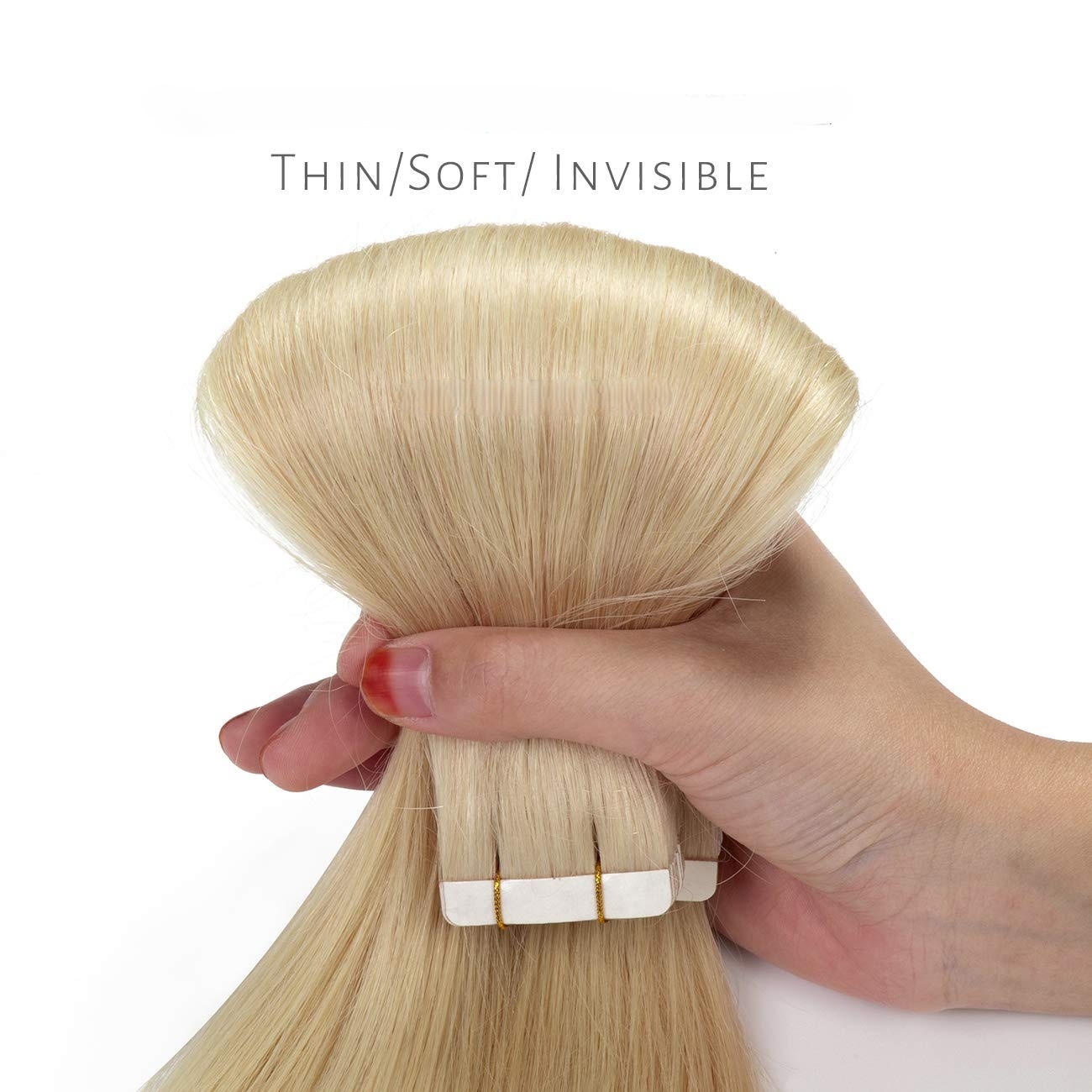
Tape-in extensions are the most popular semi-permanent extension method in salons worldwide. They consist of thin wefts of hair with a medical-grade adhesive tape pre-attached to one side. During installation, a section of the client's natural hair is sandwiched between two tape-in wefts, creating a secure bond that lies flat against the scalp. The result is virtually undetectable — the hair looks and moves naturally, with no visible bonds or beads.
The installation process is relatively straightforward for trained professionals. A full head typically requires 20 to 40 individual tape-in pieces (10 to 20 sandwiches), depending on the client's hair thickness and the desired volume. The entire process takes approximately 30 to 45 minutes, making it one of the fastest professional installation methods available.
Advantages of Tape-in Extensions
● Fast installation: 30-45 minutes for a full head, compared to 2-4 hours for sew-ins. This means you can serve more clients per day.
● Natural appearance: The flat tape bonds sit close to the scalp and are virtually invisible, even when the hair is worn up.
● Comfortable to wear: Tape-ins are lightweight and do not pull on the natural hair the way sew-in wefts or fusion bonds can.
● Reusable with re-taping: High-quality tape-in hair can be removed, re-taped, and reinstalled up to 3 times, extending the value of each pack.
● No heat damage: Unlike fusion methods, tape-ins require no heat during installation, reducing the risk of thermal damage to natural hair.
● High client satisfaction: Tape-ins consistently rank as the most requested extension type in salon surveys.
Disadvantages of Tape-in Extensions
● Limited lifespan per application: Tape-in bonds last 4-8 weeks before they need to be moved up or re-taped. This requires regular salon visits.
● Not ideal for very oily hair: Excess scalp oils can break down the adhesive prematurely, causing the tapes to slip.
● Product removal requires care: Improper removal can damage natural hair. Always use a professional adhesive remover.
● Limited styling versatility during wear: While tape-ins can be styled normally, excessive pulling or tight updos near the bonds can cause them to loosen.
Ideal Client Profile
Tape-in extensions are ideal for clients with fine to medium hair who want a natural-looking, semi-permanent solution. They are perfect for clients seeking added volume and moderate length enhancement. Clients who visit the salon regularly for maintenance and who want a low-maintenance extension experience are the best candidates. Tape-ins are not recommended for clients with very thick or coarse hair (the bonds may not hold securely) or clients with extremely oily scalps.
Lifespan and Maintenance
The tape adhesive itself lasts 4-8 weeks per application. However, the hair wefts can last 6-12 months with proper care and re-taping. Clients should avoid oil-based hair products near the roots, use sulfate-free shampoo, and schedule professional maintenance appointments every 6-8 weeks. Brushing should be done gently with a loop brush, starting from the ends and working upward.
Wholesale Pricing and Profit Potential
Retail prices for tape-in extensions typically range from $150 to $400 per full head, depending on hair quality, length, and brand. Wholesale prices from factory-direct suppliers like Miran Hair range from $3 to $8 per piece (20 pieces per pack), meaning a full-head pack costs approximately $60 to $160 wholesale. With a standard salon markup of 40-50%, salon owners can expect a gross profit of $60 to $200 per full-head installation, plus the labor charge for installation service.
Clip-in Extensions: The Versatile Option
Overview and How They Work
Clip-in extensions are the most accessible and user-friendly extension type on the market. They feature snap clips sewn onto the top of individual wefts, allowing clients to clip them in and remove them at home without any professional assistance. A typical clip-in set includes 7 to 10 wefts of varying widths — from 1-clip wide pieces for the sides to 3- or 4-clip wide pieces for the back — designed to provide full-head coverage.
Installation is incredibly simple. The client sections their hair horizontally, opens the snap clips, places the weft against the scalp, and snaps the clips closed. The entire process takes just 5 to 15 minutes, even for first-time users. Removal is equally fast and requires no products or tools.
Advantages of Clip-in Extensions
● No professional installation required: Clients can apply and remove clip-ins at home, making them the most convenient option.
● Instant transformation: 5-15 minutes from flat hair to voluminous, long locks. Perfect for events, photo shoots, and special occasions.
● No commitment: Clients can wear them today and go without tomorrow. This low-commitment approach appeals to a broad demographic.
● Longest hair lifespan: Because clip-ins are removed regularly and not subjected to constant wear, the hair can last 6-12 months or longer.
● Great retail product: Clip-ins are the easiest extension type to sell as a take-home retail product, generating passive income for salons.
● No damage to natural hair: Since they are removed daily, there is no prolonged tension or adhesive contact with natural hair.
Disadvantages of Clip-in Extensions
● May be visible if not placed correctly: Improper placement can cause the clips or weft edges to show, especially with thin hair.
● Can feel heavy: A full set of clip-ins adds noticeable weight. Some clients find them uncomfortable for all-day wear.
● Not suitable for active lifestyles: Clip-ins may shift or fall out during vigorous exercise, swimming, or high-wind activities.
● Lower perceived value: Because they are DIY, some clients perceive clip-ins as less premium than professional-only methods.
Ideal Client Profile
Clip-in extensions are perfect for clients who want temporary length and volume for special occasions — weddings, proms, parties, and photo shoots. They are also excellent for clients who are new to hair extensions and want to try them before committing to a semi-permanent method. Additionally, clip-ins appeal to the budget-conscious consumer who wants to change their look frequently without ongoing salon costs. They are a must-stock item for any salon retail shelf.
Lifespan and Maintenance
Clip-in extensions have the longest lifespan of any extension type, typically lasting 6-12 months or more with proper care. Because they are not worn continuously, the hair experiences less daily stress. Maintenance is simple: wash with sulfate-free shampoo every 15-20 wears, air dry, and store on a hanger or in a silk bag. Clients should avoid sleeping in clip-ins to prevent tangling and unnecessary wear on both the extensions and their natural hair.
Wholesale Pricing and Profit Potential
Retail prices for clip-in sets range from $50 to $200, depending on the number of pieces, hair length, and quality grade. Wholesale prices from manufacturers like Miran Hair range from $15 to $60 per set. The markup potential is excellent: a set purchased wholesale for $30 can retail for $100-$150, representing a 70-80% margin. For salons, clip-ins are primarily a retail product rather than a service, so the profit comes entirely from product markup with no labor cost.
Sew-in/Weft Extensions: The Classic Choice
Overview and How They Work
Sew-in extensions, also known as weft extensions, are the traditional method of hair extension installation. The stylist creates a cornrow braid pattern on the client's head, then sews a continuous weft of hair onto the braids using a curved needle and specialized thread. This method has been used for decades, particularly in African-American and Afro-Caribbean hair styling traditions, and remains one of the most secure and long-lasting extension options available. Within sew-in hair itself, track construction matters as much as hair quality — our guide to double weft, genius weft, and butterfly weft constructions explains which track suits which client.
Installation is labor-intensive. A full sew-in typically takes 2 to 4 hours, depending on the complexity of the braid pattern and the number of wefts being installed. The result, however, is extremely secure — sew-ins can withstand vigorous activity, including workouts, swimming, and high-humidity environments, without shifting or loosening.
Advantages of Sew-in Extensions
● Maximum security: Once sewn in, the extensions are not going anywhere. This makes sew-ins ideal for active clients and those in humid climates.
● Versatile styling: Sew-ins allow for a wide range of styling options, including updos, ponytails, and parted styles, because the wefts lay flat against the braids.
● Great for all hair types: Sew-ins work exceptionally well on textured, curly, and coarse hair types that may not hold tape-in bonds well.
● Full head coverage: A sew-in can completely cover the natural hair, providing a protective style that allows the natural hair to rest and grow.
● Cost-effective for volume: Machine weft hair used for sew-ins is typically less expensive per gram than tape-in or fusion hair.
Disadvantages of Sew-in Extensions
● Long installation time: 2-4 hours per appointment means fewer clients per day and higher labor costs.
● Tension on natural hair: Tight braids can cause tension, breakage, or traction alopecia if not installed properly by a trained stylist.
● Difficult to maintain at home: Clients cannot easily access their scalp for washing and moisturizing, which can lead to scalp issues.
● Not ideal for fine or thinning hair: The weight of the wefts and the braids required may be too heavy for fragile hair.
● Requires professional removal: Cutting the thread and removing the braids should be done by a professional to avoid damaging natural hair.
Ideal Client Profile
Sew-in extensions are best suited for clients with medium to thick, textured hair who want a long-lasting, secure installation. They are the go-to choice for clients seeking protective styles, full-head transformations, or dramatic length and volume changes. Sew-ins are particularly popular in communities where this technique has deep cultural roots and stylist expertise is readily available. Clients who lead active lifestyles and need extensions that will stay put during workouts and outdoor activities are also excellent candidates.
Lifespan and Maintenance
Sew-in extensions typically last 6-12 weeks per installation before the braids need to be redone. The hair wefts themselves can last 6-12 months with proper care. Maintenance requires regular salon visits for tightening (every 2-4 weeks), careful washing with a bottle applicator to reach the scalp, and thorough drying of the braids to prevent mildew and odor. Clients should also oil their scalp between washes to prevent dryness and itching beneath the braids.
Wholesale Pricing and Profit Potential
Retail prices for sew-in installations range from $100 to $600, including both the hair and the installation service. The hair alone (machine weft bundles) typically retails for $30 to $150 per bundle, with 2-4 bundles needed for a full head. Wholesale prices from factory-direct suppliers range from $8 to $30 per bundle. The service charge for installation adds $100 to $400 per appointment. For salons, sew-ins represent a high-revenue service because the labor component is significant and clients return regularly for maintenance.
Fusion/Keratin Tip Extensions: The Premium Service
Overview and How They Work
Fusion extensions, also called keratin tip or bond extensions, use individual strands of hair with a keratin-based adhesive pre-attached to the tip. During installation, the stylist uses a specialized heating tool to melt the keratin bond and attach each individual strand to a small section of the client's natural hair. This method creates the most natural-looking and versatile result of any extension type, as each strand moves independently with the natural hair.
Installation is the most time-consuming of all methods, typically taking 1 to 3 hours for a full head of 100 to 200 individual strands. The result, however, is virtually undetectable — even close up, the bonds are nearly invisible, and the extensions blend seamlessly with natural hair.
Advantages of Fusion Extensions
● Most natural appearance: Individual strand attachment means each extension moves independently, creating the most realistic look and feel.
● Longest wear per installation: Fusion bonds last 3-6 months before needing to be moved up, the longest of any semi-permanent method.
● Versatile styling: Clients can wear their hair in any style — updos, ponytails, braids — without visible bonds or tracks.
● Premium positioning: The high perceived value of fusion extensions allows salons to charge premium prices, attracting high-end clientele.
● Lightweight: Individual strands distribute weight evenly, reducing tension on natural hair compared to weft methods.
Disadvantages of Fusion Extensions
● Longest installation time: 1-3 hours per appointment limits the number of clients a stylist can serve per day.
● Requires heat: The melting tool uses heat, which can potentially damage natural hair if not used correctly.
● Most expensive method: Both wholesale cost and retail price are the highest of all extension types.
● Difficult removal: Professional removal with bond remover is essential. Improper removal can break natural hair.
● Not suitable for damaged or fragile hair: The weight and adhesive can stress already compromised hair.
Ideal Client Profile
Fusion extensions are the premium option, best suited for clients who want the most natural, long-lasting result and are willing to invest in quality. They are ideal for clients with medium to thick hair who want individual strand movement and the ability to style their hair in any direction. High-end salons, bridal stylists, and celebrity hair artists frequently use fusion extensions for red carpet events, photo shoots, and clients who demand the best possible result.
Lifespan and Maintenance
Fusion bonds last 3-6 months per installation. The hair strands can last 6-12 months with proper care. Maintenance involves using keratin-safe shampoo and conditioner, avoiding excessive heat styling near the bonds, and scheduling professional maintenance every 6-8 weeks to move up bonds that have grown out. Clients should sleep with their hair in a loose braid and use a silk pillowcase to minimize friction.
Wholesale Pricing and Profit Potential
Retail prices for fusion extensions range from $200 to $800 or more for a full head, with installation service. Individual strands wholesale for $0.50 to $2.00 per strand from factory-direct suppliers, with 100-200 strands needed for a full head. The total wholesale cost for hair is typically $50 to $400. Installation service charges range from $200 to $600. For high-end salons, fusion extensions represent the highest per-client revenue of any extension method.
Side-by-Side Comparison: All Extension Types
To help you quickly evaluate each extension type, here is a comprehensive comparison across the key factors that matter most to salon owners and their clients:
Installation Time
● Clip-in: 5-15 minutes (DIY at home, no professional needed)
● Tape-in: 30-45 minutes (professional installation required)
● Fusion/Keratin: 1-3 hours (professional installation required)
● Sew-in: 2-4 hours (professional installation required)
Lifespan Per Application
● Clip-in: 6-12 months total (removed daily, no per-application limit)
● Tape-in: 4-8 weeks per application (hair lasts 6-12 months with re-taping)
● Sew-in: 6-12 weeks per installation (hair lasts 6-12 months)
● Fusion/Keratin: 3-6 months per installation (hair lasts 6-12 months)
Retail Price Range (Full Head)
● Clip-in: $50-$200 (retail product, no installation fee)
● Tape-in: $150-$400 (including installation)
● Sew-in: $100-$600 (hair + installation)
● Fusion/Keratin: $200-$800+ (hair + installation)
Maintenance Frequency
● Clip-in: Wash every 15-20 wears; no salon maintenance required
● Tape-in: Re-tape every 4-8 weeks; salon visit required
● Sew-in: Tighten every 2-4 weeks; salon visit required
● Fusion/Keratin: Move-up every 6-8 weeks; salon visit required
Best For
● Clip-in: Temporary use, events, first-time users, retail sales
● Tape-in: Everyday wear, fine-to-medium hair, fast salon service
● Sew-in: Textured hair, active lifestyles, protective styling, full coverage
● Fusion/Keratin: Premium clients, maximum natural look, long-term wear
For a deeper analysis of which extension types are trending in the wholesale market, read our article on trends in bulk hair extensions for salons .
Which Extension Type Should You Stock for Your Salon?
For High-End Salons
High-end salons should prioritize tape-in and fusion extensions. These methods attract clients who are willing to invest in quality and who value a natural, seamless result. Tape-ins offer the best balance of speed and quality for your daily service menu, while fusion extensions serve as your premium offering for clients who want the absolute best. Stock clip-ins as a retail add-on for clients who want to maintain their look between salon visits.
For Community and Neighborhood Salons
Community salons serve a diverse clientele with varying budgets and needs. Tape-ins should be your core offering due to their broad appeal and fast turnaround. Sew-ins are essential if you serve clients with textured hair. Clip-ins are a must-have retail item for budget-conscious clients and special occasions. Consider adding a basic fusion service as your premium upsell option.
For Mobile Stylists
Mobile stylists should focus on methods that are portable and quick to install. Tape-ins and clip-ins are the ideal combination. Tape-ins provide your core professional service, while clip-ins serve as your retail product offering. Avoid sew-ins and fusion for mobile work, as these methods require more equipment, setup time, and controlled environments.
For Wholesale Distributors and Retailers
If you sell hair extensions wholesale or retail (rather than installing them), you need a comprehensive product catalog. Stock all four types to serve the full spectrum of salon and consumer demand. Tape-ins and clip-ins typically have the highest turnover, so maintain deeper inventory of these. Fusion and sew-in products serve niche but loyal markets. Consider offering sample packs that allow salon owners to compare types before committing to a large order.
For guidance on building the right product mix, see our guide on how to choose the right hair extension type for your market .
How to Maximize Profit with Each Extension Type
Tape-in Profit Strategy
Tape-ins generate revenue through both product sales and installation services. To maximize profit, purchase tape-in packs from a factory-direct supplier to minimize your per-piece cost. Offer package deals that include the initial installation plus one re-taping session. Sell aftercare products (sulfate-free shampoo, tape-in remover, loop brushes) alongside the service. With a 40-50% industry-standard markup on the hair plus $100-$200 in installation fees, tape-ins can generate $150-$400 per client per visit.
Clip-in Profit Strategy
Clip-ins are primarily a retail product, so your profit strategy focuses on product markup and volume. Display clip-in sets prominently in your salon retail area with before-and-after photos showing the transformation. Offer bundle deals (e.g., buy a clip-in set and get a styling tutorial session at a discount). Because clip-ins require no installation labor, the entire margin is product profit. With wholesale costs of $15-$60 and retail prices of $50-$200, your margin can reach 70-80%.
Sew-in Profit Strategy
Sew-ins are a service-heavy offering. Your profit comes primarily from installation labor, with the hair as a secondary revenue stream. To maximize revenue, offer tiered pricing based on braid pattern complexity and the number of bundles used. Sell maintenance packages that include tightening visits at a discounted rate (ensuring recurring revenue). Stock machine weft bundles in popular lengths and colors for quick turnaround. A single sew-in appointment can generate $200-$600 in total revenue.
Fusion Profit Strategy
Fusion extensions are your premium profit driver. Position them as your top-tier service with pricing that reflects the skill, time, and quality involved. Offer consultation appointments where clients can see and feel the hair before committing. Partner with a reliable supplier who provides consistent quality keratin tip strands — inconsistency in bond quality will destroy your reputation. A full fusion installation can generate $400-$1,000+ in revenue, making it your highest per-client profit opportunity.
Understanding hair extension MOQ requirements is essential when ordering stock for multiple extension types. Many suppliers offer lower MOQs for first-time orders.
Frequently Asked Questions
Q: Which hair extension type lasts the longest?
A: Fusion/keratin tip extensions last the longest per individual installation at 3-6 months. However, clip-in extensions have the longest total lifespan (6-12 months or more) because they are removed daily and not subjected to constant wear. For semi-permanent options, fusion is the longest-lasting; for temporary options, clip-ins provide the most value over time.
Q: Can I offer all four extension types in my salon?
A: Yes, and we recommend it. Offering tape-in, clip-in, sew-in, and fusion extensions allows you to serve the widest possible range of clients. However, ensure your stylists are properly trained in each method before adding it to your service menu. Start with tape-ins and clip-ins (the easiest to learn), then add sew-ins and fusion as your team builds expertise.
Q: What is the standard markup on hair extensions for salons?
A: The industry standard markup on hair extension products is 40-50%. This means if you purchase a tape-in pack wholesale for $80, you would retail it for $112-$120. Installation services are priced separately and typically add $100-$400 depending on the method. Combined product and service margins can reach 50-70% for experienced salons.
Q: How do I choose a reliable wholesale supplier for multiple extension types?
A: Look for factory-direct suppliers who manufacture multiple extension types in-house. This ensures consistent quality across your product line. Request samples before placing large orders, verify that the hair is cuticle-aligned Remy hair, and check reviews from other salon owners. Our guide on how to choose a reliable wholesale hair extensions supplier covers this topic in detail.
Q: Which extension type is most profitable for a new salon?
A: For a new salon, tape-in extensions offer the best balance of profitability and accessibility. They have a reasonable wholesale cost, a fast installation time (allowing you to serve more clients), strong client demand, and good repeat business through re-taping services. Clip-ins are also highly profitable as a retail product with no labor cost. Start with these two types and expand as your client base grows.
Ready to Stock Your Salon with Premium Hair Extensions?
Choosing the right mix of hair extension types is one of the most impactful decisions you will make for your salon business. The right product line attracts new clients, increases average ticket values, and generates recurring revenue through maintenance services. Whether you are just starting to offer extensions or looking to expand your existing product range, Miran Hair has the inventory, quality, and pricing to support your growth.
Request a Free Sample Pack from Miran Hair today. We will send you tape-in, clip-in, and weft samples so you can evaluate the quality firsthand before placing your first wholesale order. Our factory-direct pricing, 100% cuticle-aligned Remy hair guarantee, and low MOQs make it easy to get started.
Contact Us for a Custom Quote or Get Our Wholesale Price List by reaching out to our B2B sales team. We work with salons, distributors, and retailers worldwide, and we are ready to help you build a profitable hair extension product line.
Learn more about our quality standards in our guide on how we ensure consistent quality hair extensions .